


COMPOSITE MATERIAL TESTING
Advanced composite materials like those used for the manufacturing of wind turbine blades, differ from the conventional materials in two ways: They are highly anisotropic and their properties exhibit high variability due to their inhomogeneous nature. Different loading conditions lead to different failure mechanisms. Profound understanding and knowledge of the material properties is required by designers for application on composite material structures. This is especially true for structures subjected to a huge number of cycles (more than 108) with a high loading variability, such as wind turbine rotor blades. Full characterisation of their mechanical properties under different loading conditions and directions is therefore a prerequisite for use and application of fibre reinforced plastic composites.
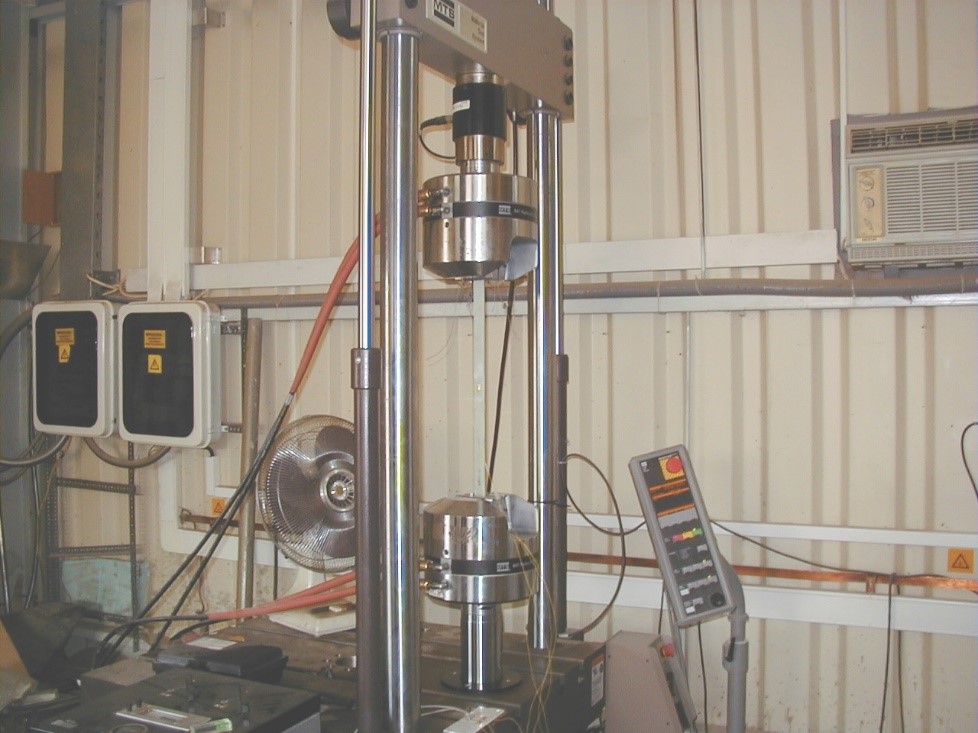
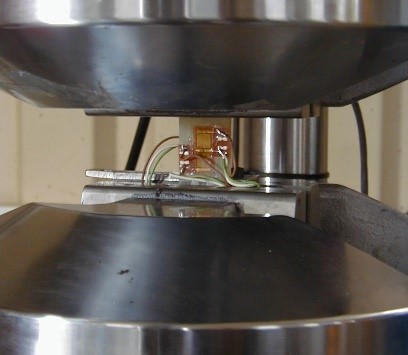
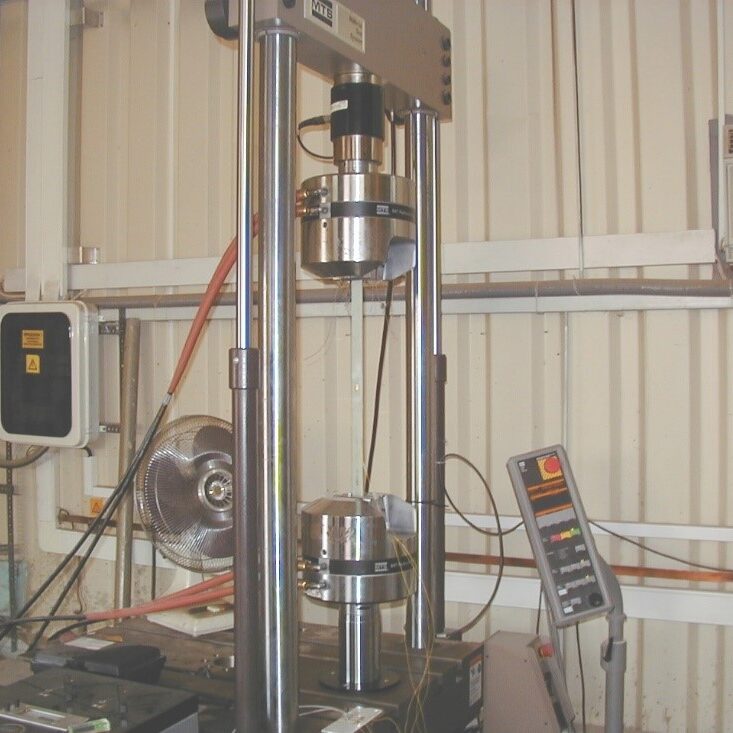
The Laboratory for Wind Turbine Testing (LWTT) of CRES through the use of a universal ±250kN fatigue testing machine is capable to perform the following test for the determination of tensile and compressive material properties:
- STATIC TESTS (Tension & Compression)
- FATIGUE TESTS (Tension & Compression)
- 3-POINT & 4-POINT BENDING TESTS
Applied load and exhibited strain (and displacement) are monitored continuously along with environmental conditions and temperature on the specimen (for fatigue tests) in order to define strength and stiffness properties as required for each coupon test performed.
Fatigue tests can be performed following constant amplitude, as well as variable amplitude load application scenarios, upon request. Both static and fatigue tests can be performed under load, displacement or strain control.
Optionally, mechanical testing can be combined with Acoustic Emission or Ultrasonic testing.
The Laboratory for Wind Turbine Testing of CRES is accredited according to the ELOT-EN ISO/IEC 17025:2005 by ESYD (Hellenic Accreditation System) under Certificate No 647 for Testing and Calibrations. The accreditation scope of the Laboratory includes tests on composite materials according to ISO 527-4, ISO 527-5, ISO 14126 & ISO 14129.