


Wind shear monitoring using Lidar systems
Among the major challenges, when designing wind farms with multi-MW wind turbines, is to measure the wind flow over the entire rotor disk. Nowadays, wind turbine towers reach the height of 100m and their upper blade tip can reach 180m height. Some years ago, a very high permanent meteorological mast would be the only possible way to measure the wind profile at such height. Today, LIDARs are a serious alternative for wind profile measurements at various heights up to 200m or even 300m.
A LIDAR emits a laser beam into the atmosphere and measures the wind speed and direction from the reflected signal, by detecting the beam’s Doppler frequency shift of the backscattered light.
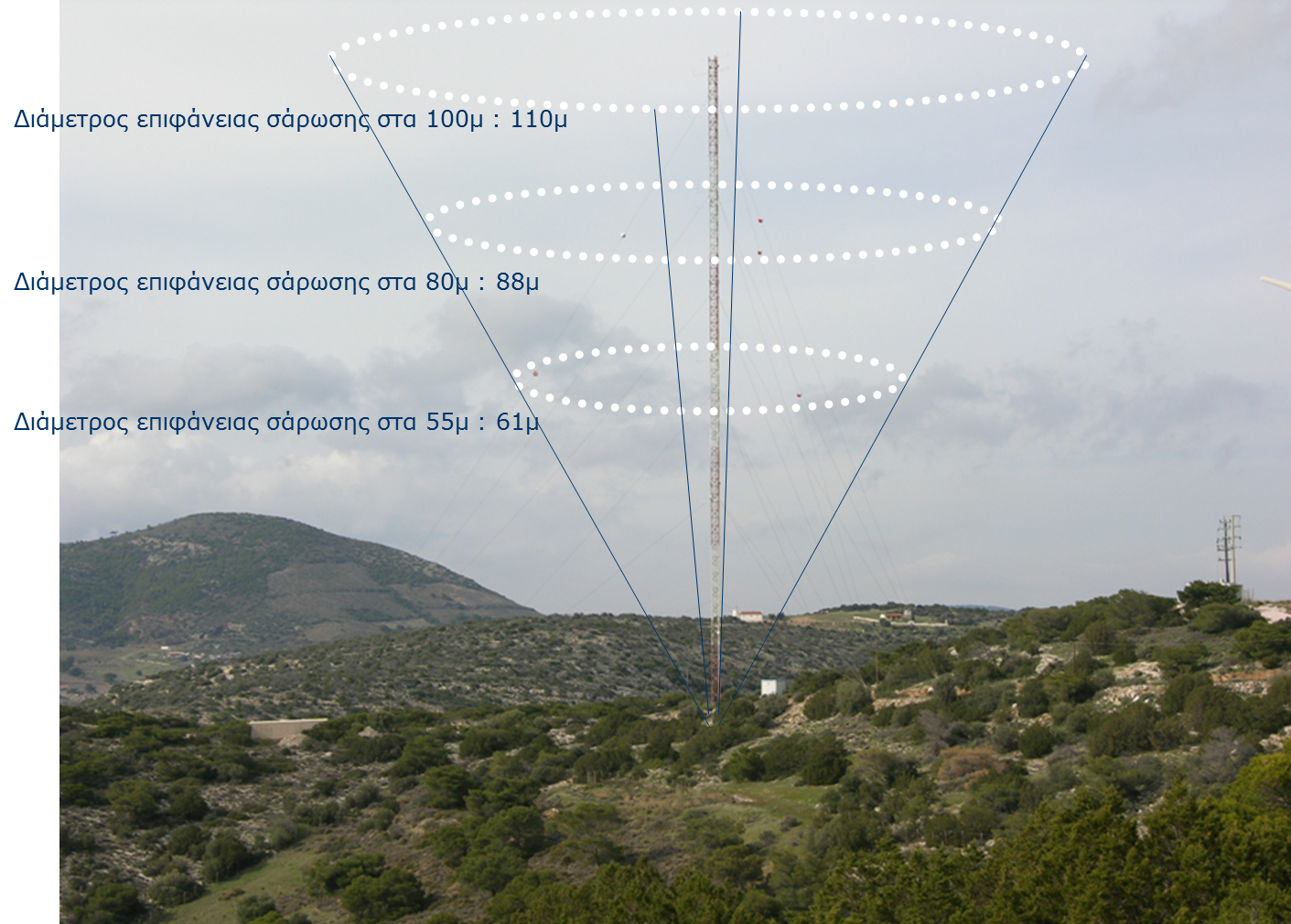
Apart the relative ease of installation, LIDARs provide some additional advantages over the classical wind measurements with a met mast. They do not disturb the flow, they provide measurements also for the upper-half of the wind turbine rotor (rarely covered by met masts, numerical models used instead) and, given their large scanning volumes, they sense more representatively a large wind turbine’s inflow.
CRES offers services with its two LIDARs: a continuous-wave unit (ZephIR) and a pulse-wave (Wincube). Both were validated by correlating their results to those obtained by a 100m meteorological mast, equipped with classical cup anemometers, wind vanes and ultrasonic anemometers at our Wind Turbine Test Station. Results showed excellent correlation coefficients and remarkable data availabilities, at all heights.
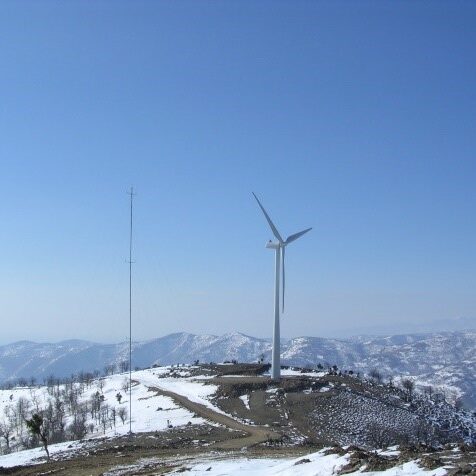
In complex topographies, a typical use case consists in measuring for a minimum of 3 months, concurrently with the site’s long-term met mast, in order to evaluate the vertical wind shear, permitting thus the extrapolation of the long-term met mast measurements at higher heights.
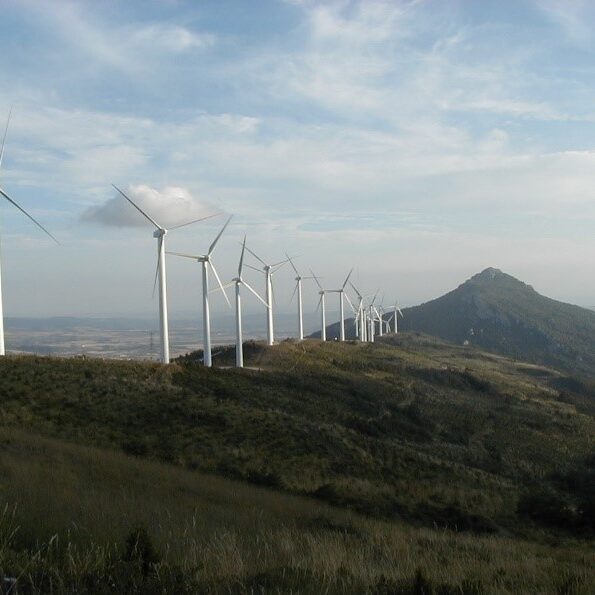
The (relative) easy deployment of LIDARs allows a better coverage of large wind farm designs, by successive measurements at selected key points, while the site’s met mast provides the reference conditions. These results are a valuable input to numerical models, as the energy yield of the wind farm will be estimated with a lower uncertainty.
LIDAR measurements significantly reduce the uncertainty of a wind farm’s annual energy yield